Pachinko looks chaotic: thousands of silver balls, flashing screens, characters shouting in Japanese. But the core routine takes about two minutes to learn. This guide walks you through a modern machine from the moment you sit down to the prize counter. Want the whole visit, from entrance to exit? See your first visit, step by step.
The 30-second version
- Insert a yen banknote into the unit beside the machine.
- Press the ball-rental button (球貸 / 貸出). Balls drop into the tray.
- Turn the handle at the bottom right, about a third of the way, so balls fly up and fall down the left side.
- When a ball drops into the start pocket in the middle, the screen spins. Three matching symbols = jackpot (大当たり).
- If the screen says 右打ち, turn the handle all the way right.
- When you’re done, count your balls, get a receipt or card, and swap it for prizes.
Know the parts of the machine
| Part | Japanese | What it does |
|---|---|---|
| Ball-lending unit (“sando”) | サンド | The slim unit beside the machine (usually on the left for pachinko). Takes banknotes and shows your cash balance. |
| Ball-rental button | 球貸 / 貸出 | Converts part of your balance into balls. |
| Return button | 返却 | Ejects your card with any remaining balance. |
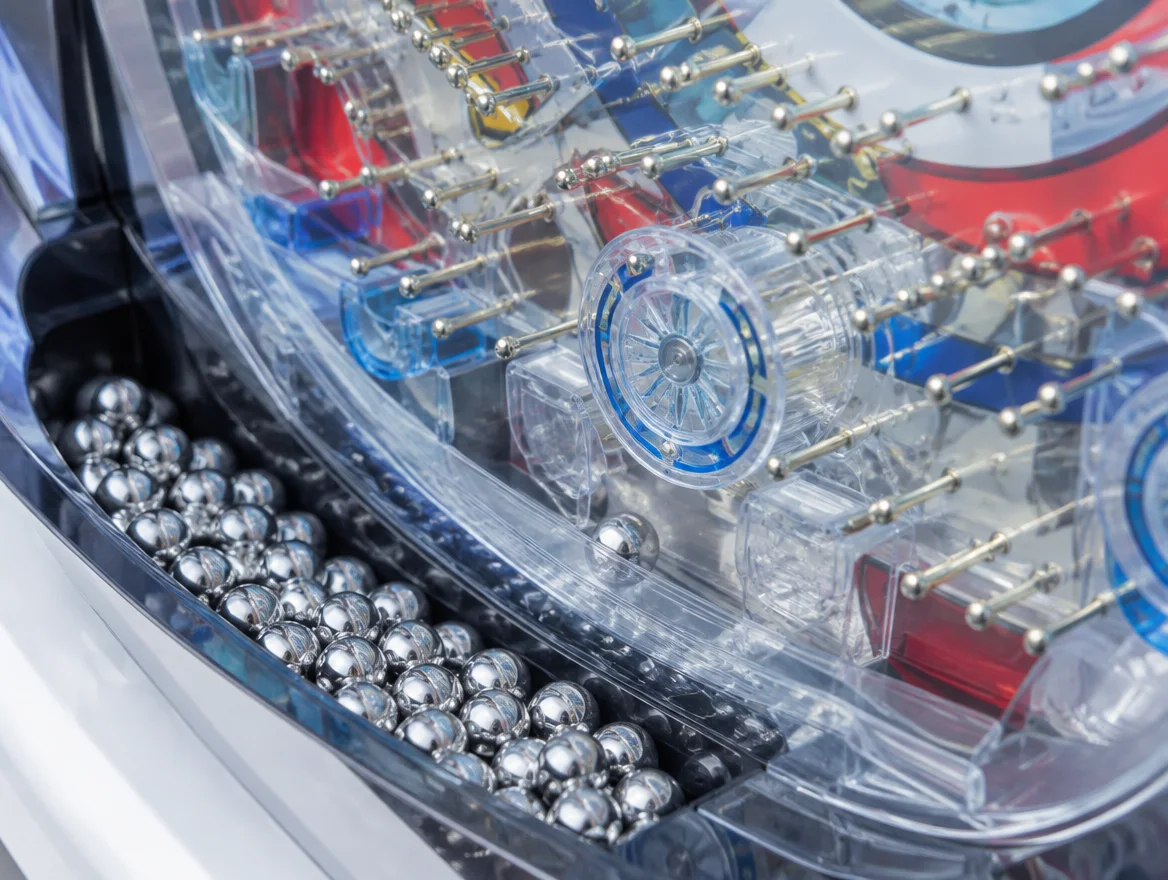
| Upper and lower trays | 上皿・下皿 | Where balls come out and wait to be fired. |
| Handle | ハンドル | Turn it right to fire. The further you turn, the harder the shot. |
| Start pocket (“start chucker”, also heso) | スタートチャッカー / ヘソ | A ball landing here starts one lottery draw on the screen. |
| Screen | 液晶 | Shows the lottery as spinning numbers and animations. |
| Attacker | アタッカー | A gate that opens during a jackpot. Every ball that goes in pays out more balls. |
| Staff call button | 呼出 | Calls an attendant. Use it whenever you’re unsure. |
Sources: DMM Pachitown, Pachinko Industry Web Reference, Japanese Slot Guide.
Step 1: Pick a section and a machine
Pick your price per ball first. Most halls have 4-yen pachinko (the standard) and 1-yen pachinko, and some have 0.5-yen. At 4 yen a ball your money goes four times faster, and the newest machines are sometimes only in the 4-yen section (DMM). For a first try, 1-yen is the gentle option. See what it costs.
Check the odds on the machine. Every machine shows its jackpot probability, such as 1/319 (Q-Bang!). Machines fall into broad groups (Global Pachinko):
- Middle spec (ミドル): around 1/199 to 1/349. The most common type: rarer jackpots, bigger payouts.
- Amadeji (甘デジ): around 1/70 to 1/128. More frequent, smaller wins. Easier on a budget.
- Hanemono (羽根物): “wing” machines where a ball caught by opening wings must drop into a V-zone. Classic, low risk and low return.
Beginner pick: DMM Pachitown recommends the Sea Story (海物語) series, such as Big Sea Story 5 Special, as simple and easy to understand (DMM). See it in our machine database.
Make sure the seat is free. An empty chair isn’t enough. If there’s a drink, a bag, balls in the tray, a card in the unit or a “reserved” tag, someone’s on a break (DMM). Pick a seat with nothing on it.
Step 2: Rent your balls
- Insert a banknote into the lending unit. Units are designed for banknotes, and ¥1,000 notes are the safest bet.
- Your balance shows on the unit’s display (or on the machine).
- Press 球貸 / 貸出. At 4-yen, each press usually gives ¥500 worth: 125 balls (Pachinko Industry Web Reference, DMM).
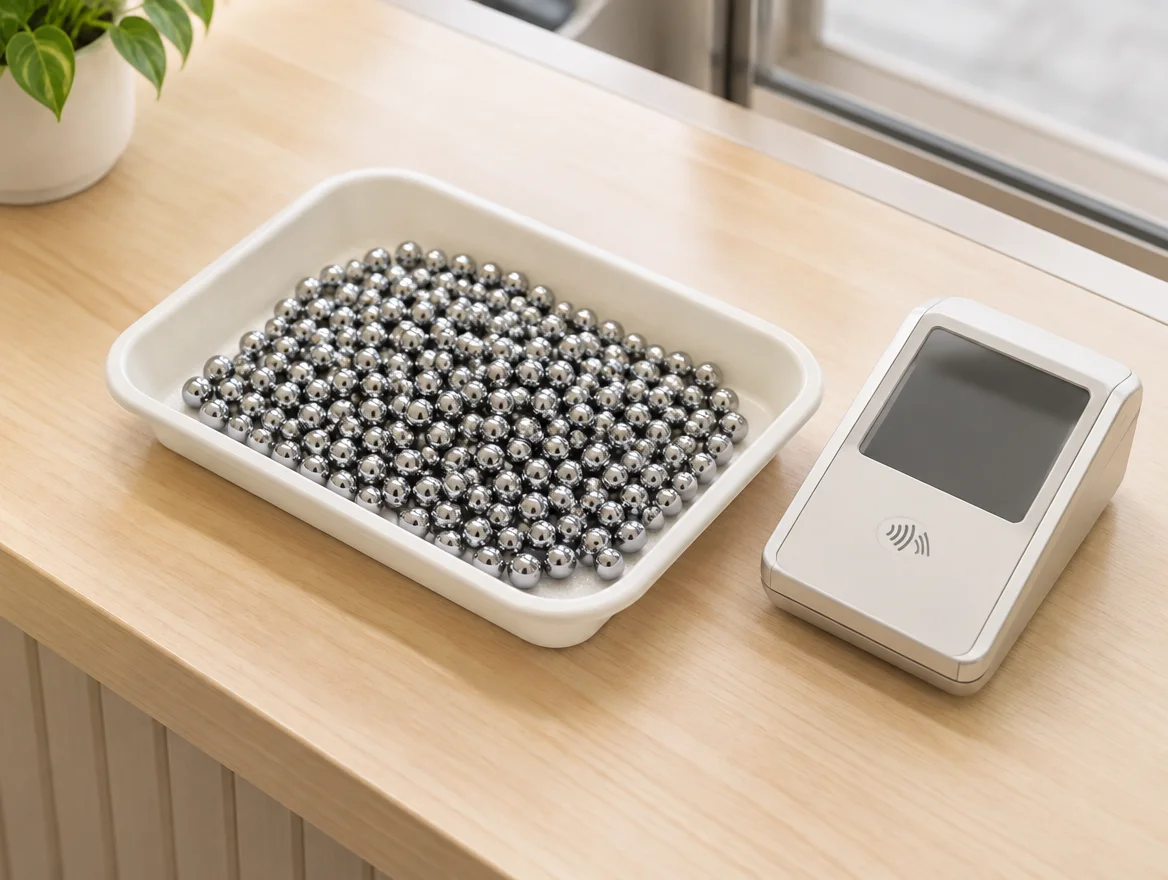
Smart pachinko (スマパチ): newer “smart” machines, introduced in 2023, seal the balls inside the cabinet and track your ball count electronically. You won’t handle loose balls, but you play the same way (Sammy). Their names start with a lowercase e (for example e Tokyo Ghoul), while conventional machines start with P (machine-name prefixes explained, Japanese).
Step 3: Shoot left and watch the start pocket
Turn the handle about one-third of the way to the right. That’s the standard position for normal play on most machines (DMM). Balls arc over the top and fall down the left side of the board (左打ち, hidari-uchi). Then hold your hand steady. Constant twisting usually makes things worse.
Most balls will drain away. That’s normal. The ones that matter drop into the start pocket in the centre. Each ball that lands there triggers one lottery draw on a standard digital machine (Japanese Slot Guide).
Held draws (保留, horyū): if balls land in the pocket while the screen is still spinning, the extra draws are stored. They usually show as small icons, and machines commonly show up to four. Extra balls beyond that don’t add more draws.
Step 4: Read the screen
When a draw runs, numbers or symbols spin and stop. Along the way you’ll see:
- リーチ (rīchi, “reach”): two matching symbols with the third still spinning. Dramatic, but most reaches still miss. The animation shows a result that’s already been decided. It isn’t a second lottery.
- 大当たり (ōatari, jackpot): three matching symbols (Global Pachinko).
- Series-specific “big chance” signs. On Sea Story, for example, a school of fish swimming across after a reach is a famous good sign (DMM).
Step 5: Hit a jackpot? Follow the instructions
During a jackpot, the attacker gate opens, and every ball that goes in pays out more balls. Keep firing. If you stop, you can miss part of the payout (DMM).
- 右打ち (migi-uchi, “shoot right”): many modern machines put the attacker on the right. When you see 右打ち or a right-pointing arrow, turn the handle all the way right (DMM; Pachinko Industry Web Reference).
- V pocket: some machines need a ball to enter a V-marked pocket to secure or continue the bonus. Miss it and the bonus can be lost (Global Pachinko).
- Go back to normal play only when the right-shooting instruction ends (Japanese Slot Guide).
When the lower tray fills up, pull the lever under it to send the balls into a box or the counting unit (DMM).
Step 6: After the jackpot, don’t walk away yet
After a jackpot, many machines enter a special mode (DMM):
- 確変 (kakuhen): “probability change”. The chance of another jackpot goes up.
- 時短 (jitan): “time shortening”. Spins go faster for a set number of draws, but the jackpot odds return to normal.
- ST and RUSH are related labels whose exact rules vary by machine.
Leaving in the middle of one of these modes throws away its benefit. On Big Sea Story 5 Special, a purple sea means kakuhen and a green sea means jitan (DMM).
Step 7: Finish, count and collect your prizes
- Stop firing, then move any balls left in the trays into the box or counter.
- Press 呼出 (call) and staff will count your balls, or use the counting unit if your machine has one. You’ll get a receipt or card (DMM).
- Press 返却 (return) to get your card back if any cash balance is left. Refund it at the in-hall refund machine the same day. After that day, the balance can only be used to rent balls at that same hall (DMM).
- Take your receipt or card to the prize counter (景品カウンター) and choose your prizes. How prizes work, including the “special prizes”, is explained in is pachinko gambling?
Why “1 in 319” doesn’t mean “within 319 spins”
Each draw is independent. On a machine with jackpot odds of 1/319, the chance of no jackpot in 319 draws is (318/319)319, or about 37%. More than a third of the time, you’d go 319 draws without a single jackpot. A machine that “hasn’t hit for ages” is no more likely to hit on the next draw. (Our own arithmetic, for illustration. Real machines have special modes on top of this.)
Common first-timer mistakes
- Cranking the handle to full power during normal play. You’ll overshoot the start pocket. Full right is for 右打ち only.
- Shooting right without being told to. It sends balls away from the start pocket.
- Leaving during kakuhen or jitan. Check the screen before you get up.
- Forgetting your card. Unused cash refunds may only work the same day.
- Not asking. The 呼出 button exists for exactly this. Staff at visitor-friendly halls expect questions.
Where to try it with help
The easiest first sessions are at halls that publish foreign-language support: MARUHAN Shinjuku in Tokyo, and MARUHAN Namba or Q-Bang! in Osaka. Or book a guided pachinko tour.
Quick answers
How do you play pachinko?
Insert a yen banknote into the unit beside the machine, press the ball-rental button, then turn the handle to launch balls up the left side of the board. When a ball drops into the start pocket, the screen runs a lottery. If three matching symbols line up, it's a jackpot: follow the screen, which often tells you to shoot right (右打ち), to collect extra balls. Exchange your balls for prizes when you finish.
Is pachinko skill or luck?
Mostly luck. Your handle control affects how many balls reach the start pocket, and so how many lottery draws you get for your money. But it doesn't change the odds of each draw, which are set by the machine.
What does 右打ち (migi-uchi) mean?
It means 'shoot right'. When it appears, usually during a jackpot or bonus mode, turn the handle fully to the right so balls travel down the right side of the board. Go back to normal play when the instruction ends.
What is the best pachinko machine for beginners?
DMM Pachitown, a major Japanese pachinko portal, recommends the Sea Story (Umi Monogatari) series, such as Big Sea Story 5 Special, as simple and easy to understand. 'Amadeji' machines with higher jackpot odds and smaller payouts are also gentler on a budget.
Sources
- DMM Pachitown – Pachinko beginner's guide (parts, ⅓ handle turn, 右打ち, kakuhen/jitan)
- Pachinko Industry Web Reference – Playing Pachinko and Exchanging for Prizes
- Global Pachinko – How to play and machine types
- Q-Bang! – Pachinko experience for first-timers (jackpot probability display)
- Japanese Slot Guide – How to play pachinko (left play, right play, holds)
- Sammy – Smart pachinko (スマパチ) explained (Japanese)
- Pachinko job-site explainer – P / e / S / L machine-name prefixes (Japanese)
- MARUHAN – Let's Play Pachinko (18+, ID)
Facts on this page were last checked against these sources on 4 October 2026. Rules, prices and venues change, so always follow the signs and staff at the venue.